array(11) {
  ["type"]=>
  string(4) "team"
  ["back_link"]=>
  string(45) "https://moreincommonus.com/team/tara-chandra/"
  ["back_title"]=>
  string(4) "Blog"
  ["publication_cta_left_title"]=>
  string(20) "Download Full Report"
  ["publication_cta_left_content"]=>
  string(117) "Explore the depth of our research at your fingertips. Get the complete insights by downloading the full report today."
  ["publication_cta_left_link"]=>
  string(1) "#"
  ["publication_cta_right_title"]=>
  string(26) "Sign Up for Our Newsletter"
  ["publication_cta_right_content"]=>
  string(221) "What unites and divides Americans today? This newsletter takes a closer look at issues pressing on America’s social and political fabric and provides recommendations for how to strengthen ties to keep us bound together."
  ["publication_cta_right_link"]=>
  string(34) "https://moreincommon.substack.com/"
  ["breadcrumb"]=>
  string(239) "<div id="breadcrumbs"><span><span><a href="https://moreincommonus.com/">Home</a></span> / <span><a href="https://moreincommonus.com/team/">Team</a></span> / <span class="breadcrumb_last" aria-current="page">Tara Chandra</span></span></div>"
  ["post"]=>
  array(36) {
    ["ID"]=>
    int(9865)
    ["post_author"]=>
    string(1) "7"
    ["post_date"]=>
    string(19) "2026-03-02 15:09:03"
    ["post_date_gmt"]=>
    string(19) "2026-03-02 15:09:03"
    ["post_content"]=>
    string(666) "<!-- wp:paragraph -->
<p>Dr. Tara Chandra is a Senior Research Manager at More in Common. She received her PhD in Political Science from the University of California, Berkeley. Her areas of expertise include democracy and authoritarianism, gender, political violence, foreign policy, and tech policy. She completed her Master’s degree in Global Affairs at Yale University’s Jackson School, and received her undergraduate degree from the University of Chicago. Prior to her graduate studies, Tara worked in Washington, DC for several years in foreign policy and national security. </p>
<!-- /wp:paragraph -->

<!-- wp:paragraph -->
<p></p>
<!-- /wp:paragraph -->"
    ["post_title"]=>
    string(12) "Tara Chandra"
    ["post_excerpt"]=>
    string(0) ""
    ["post_status"]=>
    string(7) "publish"
    ["comment_status"]=>
    string(6) "closed"
    ["ping_status"]=>
    string(6) "closed"
    ["post_password"]=>
    string(0) ""
    ["post_name"]=>
    string(12) "tara-chandra"
    ["to_ping"]=>
    string(0) ""
    ["pinged"]=>
    string(0) ""
    ["post_modified"]=>
    string(19) "2026-03-03 19:53:16"
    ["post_modified_gmt"]=>
    string(19) "2026-03-03 19:53:16"
    ["post_content_filtered"]=>
    string(0) ""
    ["post_parent"]=>
    int(0)
    ["guid"]=>
    string(54) "https://moreincommonus.com/?post_type=team&#038;p=9865"
    ["menu_order"]=>
    int(20)
    ["post_type"]=>
    string(4) "team"
    ["post_mime_type"]=>
    string(0) ""
    ["comment_count"]=>
    string(1) "0"
    ["filter"]=>
    string(3) "raw"
    ["ancestors"]=>
    array(0) {
    }
    ["page_template"]=>
    string(0) ""
    ["post_category"]=>
    array(0) {
    }
    ["tags_input"]=>
    array(0) {
    }
    ["meta"]=>
    array(7) {
      ["pronouns"]=>
      string(0) ""
      ["title"]=>
      string(23) "Senior Research Manager"
      ["linkedin"]=>
      string(42) "https://www.linkedin.com/in/tara-chandra1/"
      ["twitter"]=>
      string(0) ""
      ["favorite_finding"]=>
      string(2142) "<p><em>Civic language was perceived more positively in 2025 than in 2021.</em></p>
<p><span data-olk-copy-source="MessageBody">From "What Americans Think of Words like 'Democracy' and 'Authoritarianism' In These Times" we learned that language around democracy and inclusion continues to be viewed positively, even in the midst of the polarization we are all living through: "The largest increases occurred for the terms “Belonging” (+25% change in net positivity since 2021), “Liberty” (+23%), and “Civic Engagement” (+21%). Even terms tied to ongoing political debates, such as “Democracy” (+10%), “Patriotism” (+15%), and “Racial Equity” (+15%), saw gains from 2021 to 2025." </span></p>
<p><span class="TextRun SCXW126635024 BCX4" lang="EN-US" xml:lang="EN-US" data-contrast="auto"><span class="NormalTextRun SCXW126635024 BCX4"><strong>Source:</strong> <a id="OWA538a6f8b-7bcd-3139-b802-930e5de6b5c7" class="x_OWAAutoLink" title="https://moreincommonus.com/publication/what-americans-think-of-words-like-democracy-and-authoritarianism-in-these-times/" href="https://moreincommonus.com/publication/what-americans-think-of-words-like-democracy-and-authoritarianism-in-these-times/" target="_blank" rel="noopener noreferrer" data-auth="NotApplicable" data-linkindex="1" data-olk-copy-source="MessageBody">"What Americans Think of Words like "Democracy" and "Authoritarianism"</a></span></span></p>
<p><strong>Why:</strong> <span data-olk-copy-source="MessageBody">I think the language we use to describe our communities and our democracy matters, and this gives me hope that as Americans, we do share a deeper understanding of the norms we want to adhere to and uphold. I also find it hopeful because even though some of these words have developed coded meaning, the ideological implications that are now attached to them didn't dissuade most of the study's participants from viewing them positively. To me, this suggests that we are able to see past the politics and polarization to a greater commitment to the concepts that I think are core to our democracy, such as freedom, belonging, and civility.</span></p>"
      ["publication_1"]=>
      string(0) ""
      ["publication_2"]=>
      string(0) ""
    }
    ["meta_lists"]=>
    array(0) {
    }
    ["image_description"]=>
    string(0) ""
    ["image_alt"]=>
    string(0) ""
    ["image"]=>
    string(79) "https://moreincommonus.com/wp-content/uploads/2026/03/MiC-Headshot_Chandra.jpeg"
    ["image_id"]=>
    int(9866)
    ["link_url"]=>
    string(45) "https://moreincommonus.com/team/tara-chandra/"
    ["terms"]=>
    array(2) {
      ["team_category"]=>
      array(1) {
        [0]=>
        object(WP_Term)#2760 (11) {
          ["term_id"]=>
          int(5)
          ["name"]=>
          string(4) "Team"
          ["slug"]=>
          string(4) "team"
          ["term_group"]=>
          int(0)
          ["term_taxonomy_id"]=>
          int(5)
          ["taxonomy"]=>
          string(13) "team_category"
          ["description"]=>
          string(0) ""
          ["parent"]=>
          int(0)
          ["count"]=>
          int(15)
          ["filter"]=>
          string(3) "raw"
          ["term_order"]=>
          string(1) "1"
        }
      }
      ["location_category"]=>
      array(1) {
        [0]=>
        object(WP_Term)#2747 (11) {
          ["term_id"]=>
          int(306)
          ["name"]=>
          string(22) "San Francisco Bay Area"
          ["slug"]=>
          string(22) "san-francisco-bay-area"
          ["term_group"]=>
          int(0)
          ["term_taxonomy_id"]=>
          int(306)
          ["taxonomy"]=>
          string(17) "location_category"
          ["description"]=>
          string(0) ""
          ["parent"]=>
          int(0)
          ["count"]=>
          int(1)
          ["filter"]=>
          string(3) "raw"
          ["term_order"]=>
          string(1) "1"
        }
      }
    }
  }
}

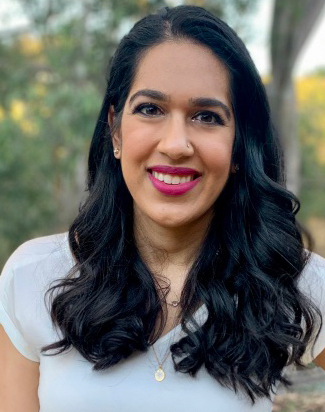
Tara Chandra

Senior Research Manager

San Francisco Bay Area

Dr. Tara Chandra is a Senior Research Manager at More in Common. She received her PhD in Political Science from the University of California, Berkeley. Her areas of expertise include democracy and authoritarianism, gender, political violence, foreign policy, and tech policy. She completed her Master’s degree in Global Affairs at Yale University’s Jackson School, and received her undergraduate degree from the University of Chicago. Prior to her graduate studies, Tara worked in Washington, DC for several years in foreign policy and national security. 

Favorite MiC Finding:

Civic language was perceived more positively in 2025 than in 2021.

From "What Americans Think of Words like 'Democracy' and 'Authoritarianism' In These Times" we learned that language around democracy and inclusion continues to be viewed positively, even in the midst of the polarization we are all living through: "The largest increases occurred for the terms “Belonging” (+25% change in net positivity since 2021), “Liberty” (+23%), and “Civic Engagement” (+21%). Even terms tied to ongoing political debates, such as “Democracy” (+10%), “Patriotism” (+15%), and “Racial Equity” (+15%), saw gains from 2021 to 2025."

Source: "What Americans Think of Words like "Democracy" and "Authoritarianism"

Why: I think the language we use to describe our communities and our democracy matters, and this gives me hope that as Americans, we do share a deeper understanding of the norms we want to adhere to and uphold. I also find it hopeful because even though some of these words have developed coded meaning, the ideological implications that are now attached to them didn't dissuade most of the study's participants from viewing them positively. To me, this suggests that we are able to see past the politics and polarization to a greater commitment to the concepts that I think are core to our democracy, such as freedom, belonging, and civility.